What the April 2026 Harare summit actually produced, what the Zambia comparison reveals, and what a responsible path forward genuinely requires.
The Namibia agreement shows that Botswana can make these deals work. The Zambia agreement, now moving toward implementation, suggests that the lessons of 2023 are being applied with greater care. Zimbabwe is the harder conversation — but it is a conversation both governments appear committed to continuing.
2026: What Has Actually Been Agreed and What Has Not
The April 2026 Harare summit between Presidents Boko and Mnangagwa produced a Memorandum of Understanding on immigration cooperation. It is not a passport-free travel agreement. The distinction is significant and both governments are deliberately observing it, suggesting that the lessons of 2023 have been at least partially absorbed.
Mnangagwa's proposal at the summit was a phased framework — beginning with border communities and short-term travellers, then expanding as systems allowed. Boko pointed to Botswana's ongoing work on cryptographic national identity cards: smart documents with encrypted microchips that can be authenticated instantly at a border post, potentially via smartphone, storing verified credentials digitally. The technology exists. Building it and deploying it on both sides of the border takes time and resources.
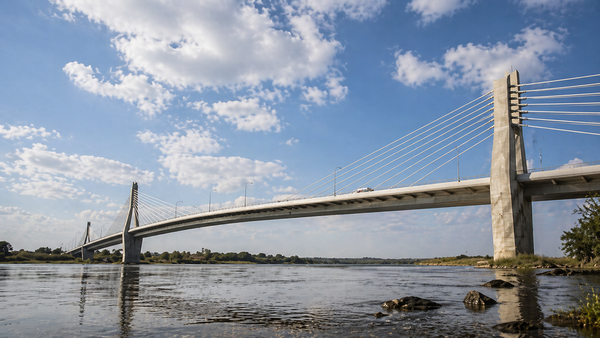
The more instructive comparison within the region is Zambia. A passport-free travel agreement between Botswana and Zambia was concluded between February and April 2026, with implementation targeted for 2027. The 2027 date is not bureaucratic delay — it is deliberately tied to Zambia completing its own national digital ID programme. The Kazungula Bridge crossing between the two countries is the focal point. That deal has attracted little public opposition in either country, and the reason is clear: the sequencing is right. Infrastructure first, liberalisation second.
What a Responsible Path Forward Actually Requires
For passport-free travel with Zimbabwe to move from vision to reality, several things need to fall into place — in sequence, not simultaneously.
A formal bilateral agreement with clear terms, safeguards, phasing, and exit provisions needs to be negotiated and ratified through proper legal channels. The April 2026 MoU is a statement of intent, not an operational framework.
Digital identity infrastructure needs to be built and verified on both sides of the border. Botswana's cryptographic ID programme is underway. Zimbabwe's equivalent capability requires independent assessment. Real-time verification is the security foundation, not an optional add-on.
Anti-trafficking and border crime protocols need to be upgraded specifically for a passport-free environment — not retrofitted after the fact.
A genuine, structured public consultation process needs to take place in Botswana — one that engages citizens and elected representatives meaningfully before commitments are made, not after. The 2023 experience demonstrated precisely what happens when that step is skipped.
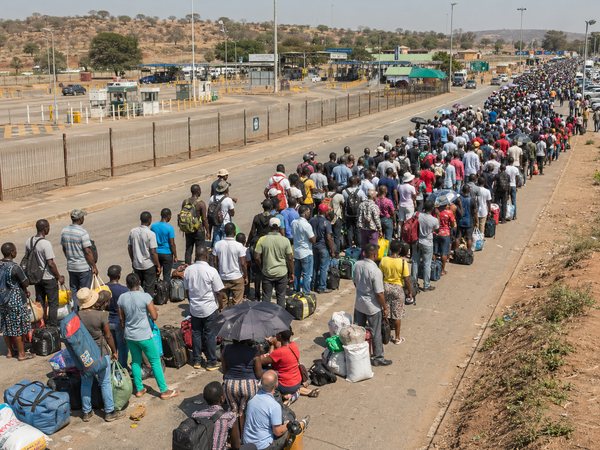
Economic asymmetry needs to be explicitly addressed in the agreement — through phasing, through caps on specific categories of movement, or through linked commitments on economic development. Ignoring the asymmetry does not make it disappear. It just moves it from the negotiating table to the border post.
"The threat of xenophobic mobilisation can be reduced if legitimate concerns are addressed. Many countries in Africa have inadequate systems of civil registration — addressing this is one of the most concrete ways to enable the free movement that everyone claims to support."— The Conversation, October 2025
The Verdict
Southern Africa has spent thirty years trying and failing to build the regional free movement framework that would make bilateral deals like this one less fraught. That failure is not an accident — it reflects genuine, structural tensions between countries at very different stages of economic development, with very different capacities for managing the flows that open borders generate.
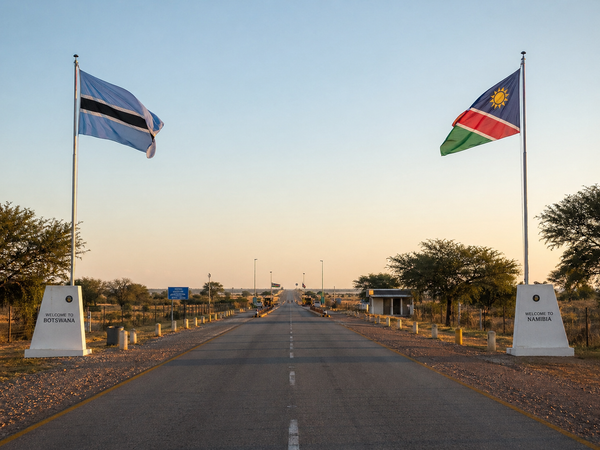
The Namibia deal proves the model can work. The Zambia deal, built slowly and sequenced carefully, suggests the region is learning. Zimbabwe is the hardest test because the asymmetries are largest, the history of migration pressure is longest, and the domestic political environment in Botswana is most sensitive.
Mnangagwa's vision of one family moving freely across a shared border is not wrong. The borders that divide Zimbabwe and Botswana were drawn by colonial powers with no reference to the communities, the kinship networks or the ecosystems on either side. The case for reconnecting them is real. But the path from a compelling speech in Harare to a functioning, safe, ID-based border crossing is longer and harder than any summit communiqué suggests.
The honest question is not whether Botswana should open its borders to Zimbabwe. It is whether both countries are willing to do the slow, unglamorous infrastructure work — technical, legal, institutional and political — that would make it safe and sustainable to do so. Right now, the answer is: not yet. But the conversation, at least, is finally being had in the right way.
Sources & References
1. UN Economic Commission for Africa. "SADC — Free Movement of Persons." UNECA, 2024.
2. CAPMAD. "SADC: Southern Africa Moves Toward Free Movement." February 2025.
3. Strategic Review for Southern Africa. "The Free Movement of People in SADC." University of Pretoria Journals, 2023.
4. SIHMA / IOM. "African Migration Statistics: Zimbabwe." Southern African Institute for Human Rights, 2024.
5. Global Detention Project. "Botswana Immigration Detention Profile." 2022.
6. IOL / SABC News. "BMA intercepts 500 Zimbabweans attempting to leave South Africa illegally into Botswana." December 2025.
7. Campbell, E. & Crush, J. "They Don't Want Foreigners: Zimbabwean migration and xenophobia in Botswana." African Studies, 2015.
8. ENACT Africa / Organised Crime Index. "Criminality in Zimbabwe." 2023.
9. CAPMAD / World Bank cited therein. "SADC free movement GDP projections." February 2025.
10. IOM / African Union Commission. "African Union Continental Free Movement of Persons." 2019.
11. Musakaruka et al. "Free Movement of Persons and Cross-Border Trade in SADC: The Zimbabwean Example." African Development Review, Wiley, 2025.
12. SIHMA. "Migration on the Rise: Examining the South Africa-Zimbabwe Corridor in 2024." 2024.
13. The Conversation. "African countries are stuck on the free movement of people. How to break the logjam." October 2025.