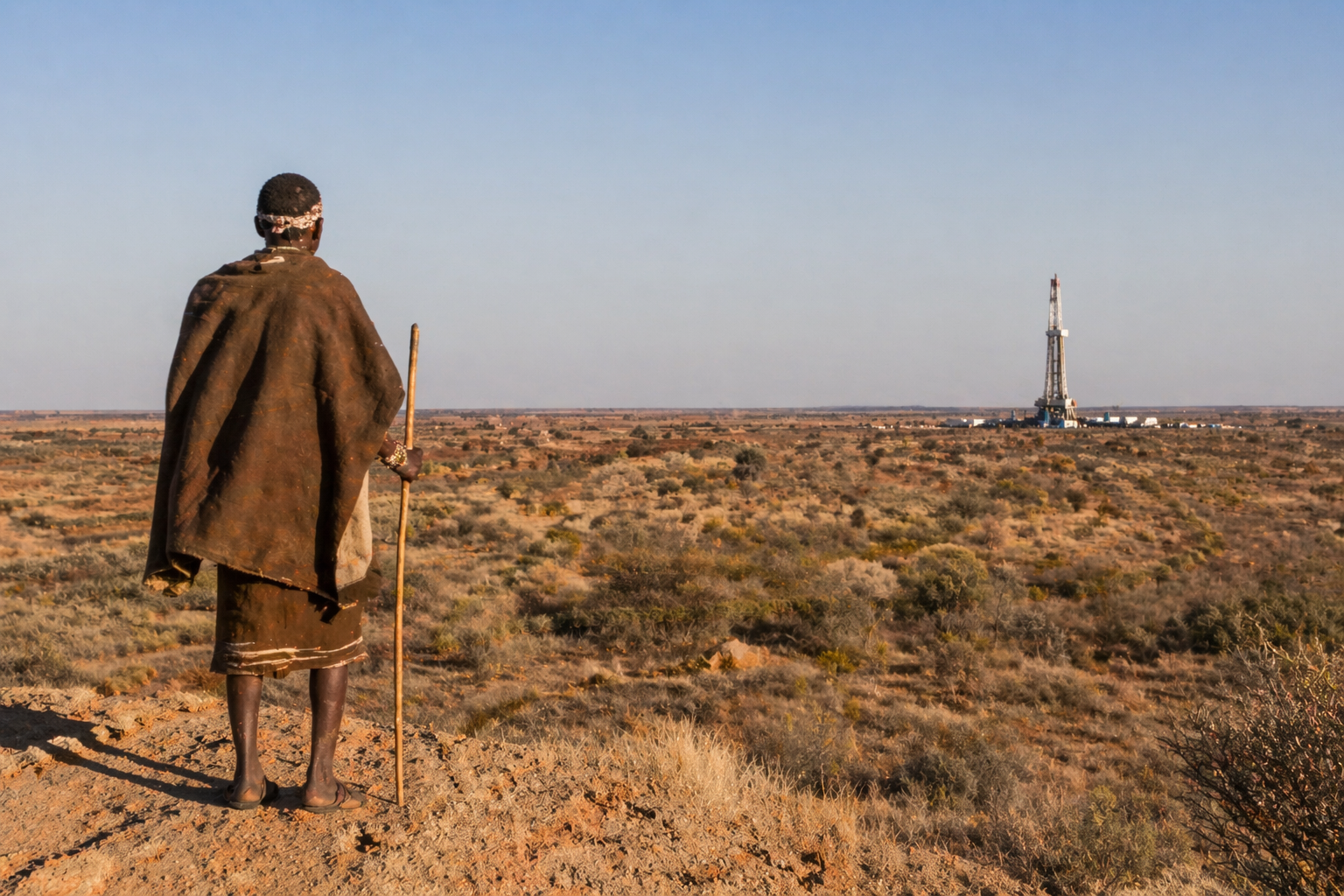
Beneath the sands of the Kalahari, there is oil. Billions of barrels of it, sitting underneath some of the most sacred, most ecologically irreplaceable land on the African continent. A foreign company already has the licence to drill for it. The government already renewed that licence. And most Batswana have no idea any of this is happening.
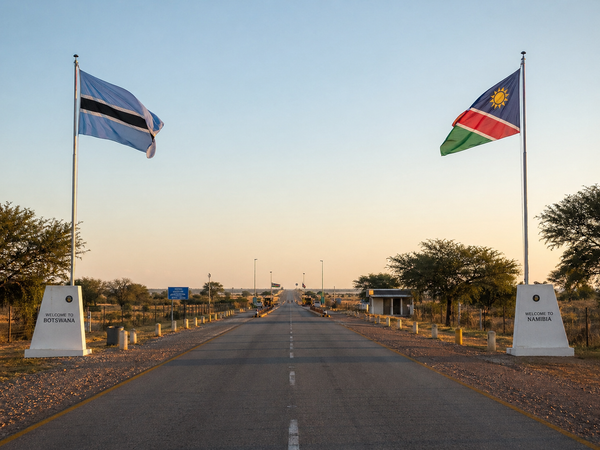
The company is called Reconnaissance Energy Africa — ReconAfrica — a Canadian oil and gas firm listed on four stock exchanges and headquartered in Calgary. It holds a 100% stake in a licence covering roughly 2.2 million acres of northwestern Botswana, and a further 6.3 million acres across the border in Namibia. The Okavango Delta — a UNESCO World Heritage Site and the lifeblood of Botswana's tourism economy — sits directly downstream. The San people's ancestral lands sit above the drill sites. And Botswana's Department of Mines has just renewed ReconAfrica's exploration permit through to September 2028, with a 25-year production licence and a 20-year renewal on the table. This is not a rumour or a prospector's fantasy. This is happening right now.
What Is the Kavango Basin?
The Kavango Basin is a vast sedimentary formation running beneath northeastern Namibia and northwestern Botswana. Some 110 million years ago, it formed at the bottom of a shallow inland sea. Over hundreds of millions of years, that depression filled with sediment — leaves, sand, organic matter — which, at the right depth and with the right organic composition, transforms over tens of millions of years into oil.
The KAZA Transfrontier conservation area, where much of this exploration is taking place, crosses the borders of Angola, Botswana, Namibia, Zambia, and Zimbabwe, and is nearly twice as large as the United Kingdom. The Okavango River flows right through it. Its water originates as seasonal rain in Angola's highlands. In Botswana, the river fans out into the Kalahari Desert to form the Okavango Delta — a UNESCO World Heritage Site that transforms an otherwise dry region into a waterlogged wetland providing vital resources for animals, plants, and over one million people.
This is the land sitting on top of the oil.
The Company, the Licence, and the Money
The company at the centre of everything is Reconnaissance Energy Africa Ltd. — known simply as ReconAfrica. It is a Canadian oil and gas exploration firm, headquartered in Calgary, co-founded by Craig Steinke and Jay Park, and listed on the TSX Venture Exchange, the Frankfurt Stock Exchange, the OTCQX, and the Namibian Stock Exchange. Steinke reportedly accessed a global dataset of potential undeveloped oil and gas sites and, knowing that an old well had been drilled nearby in 1964, leased the lands in early 2014.
In northwest Botswana, ReconAfrica holds a 100% share in a licence covering an area of around 9,000 square kilometres — approximately 2.2 million acres. The Botswana agreement gives ReconAfrica the right to enter into a 25-year production licence with a 20-year renewal period. In Namibia, the terms are slightly different: the company holds a 90% share in an exploration licence covering over 25,000 square kilometres, with the remaining 10% owned by the Namibian government through the state oil company, NAMCOR.
The Botswana licence was recently renewed by the Department of Mines, covering the period from October 2024 to September 2028. Under the terms of this renewal, ReconAfrica is required to conduct geotechnical evaluations, vegetation mapping, a water study report, methane seep detection activities, an environmental impact study, and provide funding for Botswana Petroleum Exploration and Training.
What they are not required to do, apparently, is slow down.
The Numbers They're Using to Sell This
The figures being circulated are the kind that make investors salivate and everyone else nervous. In May 2021, ReconAfrica claimed it could generate some 100 billion barrels of oil and gas from its site in Namibia and Botswana — roughly equivalent to the proven oil reserves of Kuwait or the United Arab Emirates. An independent assessment commissioned more recently by the company, prepared by Netherland, Sewell & Associates Inc. (NSAI), put the figure at 19.6 billion barrels of undiscovered oil-in-place across the Kavango Basin — though these are unrisked estimates with no guarantees of commercial viability.
According to experts, the company's earlier estimate of 120 billion barrels of oil in place is highly questionable. The difference between oil that is theoretically "in place" and oil that can actually be profitably extracted is enormous — and ReconAfrica's promotional materials have not always been transparent about that distinction. That gap between what the company told investors and what the geology actually showed would become one of the central accusations against it.
What Has Actually Been Found
ReconAfrica began exploratory drilling in the Namibian portion of the basin in December 2020. By March 2021, the company announced that its first well had been completed and that preliminary results showed the discovery of a working petroleum system. Its second well, it said, provided further evidence of the same. Between 2021 and 2023, three stratigraphic test wells were drilled, proving a working petroleum system and multiple reservoir sequences. Over 2,750 kilometres of seismic lines were acquired and processed across 2D seismic programs, and approximately 5,000 square kilometres of Enhanced Full Tensor Gravity data were acquired and processed in 2023.
The Naingopo exploration well, spudded in July 2024, produced the most concrete results yet. Completed in late 2024, it confirmed the presence of hydrocarbon shows and oil flowing to surface, validating the Damara Fold Belt's potential. Shortly after, the Kavango West 1X well was drilled — and in December 2025, it encountered approximately 400 metres of gross hydrocarbon section identified on wireline logs in the Otavi carbonate section. As of March 2026, ReconAfrica has commenced production testing operations at the Kavango West 1X discovery well, having received the required regulatory permits.
In the company's own words, this is a "catalyst-rich" year. For communities downstream, it is something else entirely.
The Controversies
This is where the story gets darker — and where Botswana needs to pay very close attention.
The Fraud Allegations
From almost the moment ReconAfrica went public with its plans, financial regulators began receiving complaints. A whistleblower complaint filed with the U.S. Securities and Exchange Commission on May 5, 2021 alleged that the company had violated securities laws by failing to disclose crucial information about its plans to explore in sensitive wilderness in Namibia and Botswana and cited more than 150 instances of misleading statements. The complaint alleged that the company raised millions of dollars by fraudulent means and that several top executives sold their shares while ReconAfrica promoted its stock. The company's value had increased from $191 million at the start of the year to more than a billion dollars by mid-May.
In October 2021, a class action lawsuit was filed in the United States on behalf of investors who bought shares between February 2019 and September 2021. The lawsuit alleged that defendants made false and misleading statements and failed to disclose the company's plan for using unconventional means of extraction including fracking, that it would begin unlicensed drilling tests, that it would illegally use water for well testing, and that it would illegally store used water in unlined pools.
Then the RCMP got involved. The Royal Canadian Mounted Police launched an investigation into ReconAfrica following multiple complaints from environmentalists, with the probe focused on two issues: the company's ties to politically connected figures in Namibia, and its stock promotion activities. ReconAfrica obtained the services of Knowledge Katti, a controversial Namibian businessman described as having a close relationship with high-ranking government officials including the president. ReconAfrica later reported that Katti was no longer affiliated with the company.
The Fracking Question
After the company's plans were widely reported in late 2020, Namibians and environmental activists reacted to the prospect of fracking with concern and outrage, and the company publicly backtracked — emphasizing that it would focus on oil recoverable through conventional drilling and scrubbing its website of earlier allusions to fracking. Botswana's then-minister of mineral resources, Lefoko Moagi, declared the country would not allow fracking.
But the backtracking was not entirely convincing. Even as ReconAfrica was saying it would not use fracking, it continued to base its oil production and revenue estimates on the technique in its research reports, according to Erica Lyman, a law professor and director of the Global Law Alliance for Animals and the Environment at Lewis and Clark Law School.
"On one hand, the company has said that fracking is not in their vocabulary. But their investor reports, the expertise of their staff, and their statements regarding the scale of the resources here all appear to be based on fracking of unconventional resources." — Prof. Erica Lyman, Lewis and Clark Law School
The Environmental and Legal Violations
A Namibian parliamentary investigation found that ReconAfrica had violated several of the country's laws. The committee found that ReconAfrica had not secured the proper permits before beginning its oil exploration activities, including drilling boreholes without permits. The violations were described as minor by ruling party members — but the fact that a foreign company could drill illegally in a sovereign nation's wilderness and continue operating without losing its licence is a question that Botswana must ask itself before this story gets any further.
One of ReconAfrica's first containment ponds for drilling waste had not been lined at all, meaning pollution waste was draining directly into the ground. In 2021, the Namibian organisation Frack-Free Namibia accused ReconAfrica's 2D seismic surveying of causing permanent structural damage to nearby homes, claiming the company operated within 30 meters of residential properties — allegedly disregarding the 0.5 to 1 kilometer buffer zone prescribed in its own environmental impact assessment.
The Silencing of Critics
A 187-page complaint filed with the Canadian Ombudsperson for Responsible Enterprise alleged that ReconAfrica's operations violated international human rights, including the rights to health, water, food, and adequate housing, as well as Indigenous rights to free, prior, and informed consent.
What makes it worse is how critics were treated. The chairperson of the Kapinga Kamwalye Conservancy, Thomas Muronga, reported that during a Farmers Union meeting, a ReconAfrica spokesperson showed him that she had access to his private WhatsApp messages, and refused to explain how his private communications had come into her possession. Muronga said he reported the incident to the Rundu Police Station. Then-chairperson of the Kavango East and West Community Association and a pair of human rights activists were detained for six hours at Rundu Police Station, allegedly at the request of ReconAfrica, accused of misinforming the public. Police searched Muyemburuko's phone without a warrant and detained him without charge.
In multiple affidavits filed with the CORE complaint, residents of Namibia described being offered jobs in exchange for silence. An activist whose home was later ransacked said he believed his physical safety was linked to his vocal opposition to the company.
The ESG Lie
A separate complaint sent to the FBI's white-collar crime division alleged that ReconAfrica had made bogus Environmental, Social and Governance claims to attract investors, with advocacy groups arguing that ESG metrics had been misrepresented while the company illegally drilled.
"Africa is not for sale, and our lands and our farms and water systems are not sacrifice zones for foreign companies to come and pollute. Those days of colonialism are over; we need sustainable development." — Thomas Muronga, Chair, Kapinga Kamwalye Conservancy
Celebrities and Governments Pushed Back
The backlash reached the highest levels of international attention. In October 2021, Prince Harry and Reinhold Mangundu co-wrote an opinion article in the Washington Post condemning ReconAfrica's exploratory activities. Leonardo DiCaprio also spoke out. U.S. Senator Patrick Leahy and Congressman Jeff Fortenberry called for scrutiny of the company's activities by the U.S. Securities and Exchange Commission. UNESCO's World Heritage Centre formally expressed concern about the potential impact on the Okavango Delta and Tsodilo Hills World Heritage properties, requesting more information from both governments in accordance with the Operational Guidelines for the Implementation of the World Heritage Convention.
What This Means for Botswana
Botswana has not been the loudest voice in this story. That silence is itself a problem.
The Okavango Delta is not just an ecological wonder — it is a cornerstone of Botswana's tourism industry, its international identity, and the water security of communities across the north. Supporters of drilling argue that the countries have every right to exploit their own natural resources, and that the developed world spent the past century doing exactly that to get rich. That argument is not without merit. But it is also not an argument that addresses what happens when a foreign company extracts the oil, takes the profits, and leaves — and Botswana is left with contaminated groundwater, communities that were never properly consulted, and a UNESCO site that can no longer carry the weight of its designation.
The San people, who have lived in Southern Africa including the lands around the Okavango River for thousands of years, have been clear: they do not want this project on their ancestral lands. The Botswana government has largely not engaged with that position in public.
Outside Namibia, ReconAfrica has been sued by investors in the United States and Canada for providing misinformation. The company's own track record — unlicensed drilling, unlined waste pits, alleged surveillance of activists, a parliamentary finding of legal violations — should give any government pause before renewing a licence, let alone extending it to 2028.
Where Things Stand
Production testing at the Kavango West 1X well is now underway. ReconAfrica's Botswana licence runs to September 2028. The company has drilled its way to what it calls a significant discovery — and is now seeking partners and financing to go further.
The question for Botswana is not whether there is oil under the Kalahari. There very likely is. The question is who this oil is for, under what conditions it will be extracted, and whether the communities living above it — and the ecosystem downstream of it — will survive the answer.
Selebi Phikwe told us what happens when Botswana lets extractive industry run its course without accountability. That story is still not over. This one is only beginning.
Botswana cannot afford to be a spectator in its own resources story.
Sources: National Geographic, The Globe and Mail, Mongabay, BankTrack, UNESCO World Heritage Centre, VOA News, Canada's National Observer, BusinessWire, ReconAfrica corporate filings, GOGEL, Wikipedia, Business Weekly & Review Botswana, Energy-Pedia.